
The MINI One, celebrated for its spirited drive and iconic design, demands understanding for optimal enjoyment. Owners frequently discuss reliability concerns alongside its fun handling, as noted in various online forums and reviews from 2023-2026.
What is the MINI One?
The MINI One represents the entry point into the iconic MINI family, offering a blend of style, agility, and affordability. Often described as a car that brings a smile to your face while driving, it’s a compact hatchback known for its distinctive British design and go-kart-like handling. However, online discussions from owners, particularly those with older models like the R56 (2012), frequently highlight potential reliability issues.
While offering a fun driving experience, the MINI One isn’t without its quirks. Owners should be aware of potential problems like oil leaks, leading to oil consumption, a common issue discussed in online communities. Despite these concerns, the MINI One remains a popular choice for those seeking a unique and characterful small car.
Brief History of the MINI One
The MINI story began with the original Mini in 1959, a revolutionary small car. The modern MINI, launched in 2001 by BMW, revived the spirit with a contemporary design. The MINI One specifically emerged as a more accessible version within the new MINI lineup, focusing on affordability without sacrificing the core MINI experience.
Over the years, the MINI One has evolved through generations (R50/R53, R56, F56, and beyond), each bringing improvements in technology, safety, and efficiency. Discussions among owners reveal a distinction between older models (like the R56 with the N16 engine) and newer iterations, with reliability being a recurring theme. The brand is committed to full electrification by 2030, signaling a significant shift in its future.

Understanding Your MINI One: Key Features
The MINI One blends classic styling with modern technology, offering a unique driving experience. Owners appreciate its customizable options and compact size, despite potential reliability issues.
Engine Specifications & Performance
The MINI One’s engine has evolved over the years, with early models featuring 1.6-liter engines, known for potential oil leaks and burning oil – a common concern voiced by owners of R-series MINIs (like the 2012 R56). Later iterations introduced 1.6T engines, offering increased power but potentially reduced overall reliability.
While specific performance figures vary by year and engine type, the MINI One prioritizes nimble handling and fuel efficiency over outright speed. Owners should be aware of the differences between the 1.6 and 1.6T engines when considering maintenance and potential repairs. Regular checks for oil leaks are crucial, particularly in older models, to maintain optimal engine performance and longevity.
Interior Design and Comfort
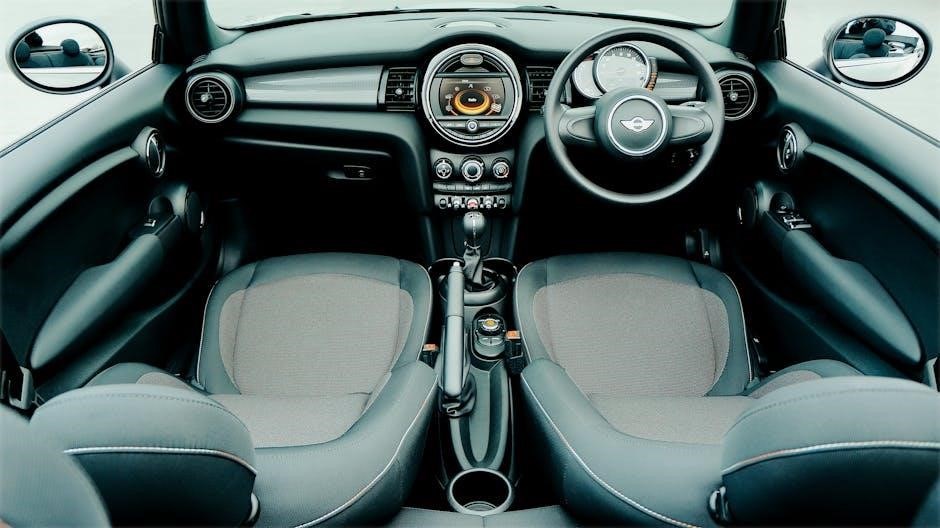
The MINI One’s interior is renowned for its quirky and stylish design, often prioritizing aesthetics and a fun driving experience over spaciousness. Available in various configurations – 3-door, 5-door, and convertible – the interior layout adapts to each body style. Owners appreciate the customizable options, allowing for personalized touches.
Comfort levels are generally adequate for shorter journeys, though rear passenger space can be limited in the 3-door model. The focus is on creating a driver-centric environment with intuitive controls and a retro-modern ambiance. While not luxurious, the MINI One’s interior offers a unique and engaging experience, reflecting the brand’s playful character.
Exterior Styling and Options
The MINI One’s exterior is instantly recognizable, retaining the classic design cues that have defined the brand for decades. Available as a hatchback, convertible, or with extended body styles like the Clubman, the MINI One offers diverse options. Owners can personalize their vehicle with a wide array of colors and trim levels, reflecting individual style.
From sporty accents to chrome detailing, customization is key. The 2024 models showcased at the Guangzhou Auto Show emphasize increased personalization and digital integration. MINI’s range broadly divides into ‘small’ and ‘large’ models, impacting exterior dimensions and available features. Careful consideration of these options ensures a MINI One perfectly suits individual preferences.

Operating Your MINI One
Familiarizing yourself with the MINI One’s controls is crucial for a safe and enjoyable driving experience. Understanding dashboard indicators and gear shifting is paramount for optimal performance.
Starting and Stopping the Engine
Starting your MINI One is generally straightforward, requiring the key to be fully inserted and turned clockwise to the ‘start’ position. Ensure the parking brake is engaged and your foot firmly presses the clutch pedal (for manual transmissions) or the brake pedal (for automatic transmissions). The engine should ignite promptly.
To stop the engine, shift the gear lever into neutral or park, and turn the key to the ‘off’ position. Remove the key to prevent accidental activation. Modern MINI Ones may feature a start/stop button; a single press with your foot on the brake initiates starting, and a press stops the engine. Always allow the engine to idle briefly before switching off, especially after spirited driving, to ensure proper cooling and lubrication.
Understanding the Dashboard Indicators
The MINI One’s dashboard features a comprehensive array of indicators, crucial for monitoring vehicle health. Key lights include the engine management warning (often resembling an engine symbol), signaling potential mechanical issues requiring immediate attention. A brake warning light illuminates if the parking brake is engaged or brake fluid is low.
The battery warning light indicates charging system problems, while the oil pressure light signals insufficient oil circulation. Pay close attention to any illuminated warning lights, consulting the full owner’s manual for detailed explanations. Ignoring these signals can lead to more significant and costly repairs, impacting the vehicle’s reliability, a common concern among MINI One owners.
Gear Shifting and Driving Modes
The MINI One typically offers a standard six-speed manual or an optional automatic transmission. For manual transmissions, smooth and precise gear changes are essential for maintaining optimal performance and fuel efficiency. Automatic transmissions feature selectable driving modes – often including Sport, Eco, and standard – altering throttle response and shift points.
Sport mode enhances acceleration, while Eco prioritizes fuel economy. Familiarize yourself with the gear shift pattern and the function of each driving mode to tailor the driving experience. Remember that the MINI One is known for its engaging handling, so responsive gear selection complements its spirited nature, contributing to the enjoyable driving experience owners appreciate.

Maintenance and Care
Regular maintenance is crucial for MINI One reliability, a common concern among owners. Consistent checks of fluids, tires, and adherence to the schedule are vital for longevity.
Regular Maintenance Schedule
Maintaining your MINI One requires a consistent schedule to ensure optimal performance and address potential reliability issues, frequently discussed by owners. Every 10,000 miles or annually (whichever comes first), an oil and filter change is essential. Inspect brake pads, discs, and fluid levels during this service.
At 20,000 miles, add a pollen filter replacement and a thorough inspection of suspension components. Further checks at 30,000 miles should include spark plugs (if applicable), coolant levels, and a diagnostic scan for any error codes.
Major servicing, encompassing timing belt replacement (if fitted), is typically recommended around 60,000-80,000 miles. Consistent attention to these intervals, as highlighted in owner experiences, can mitigate common MINI One problems and preserve its enjoyable driving character.
Checking Fluid Levels (Oil, Coolant, Brake Fluid)
Regularly inspecting fluid levels is crucial for your MINI One’s health, addressing potential issues noted by owners regarding reliability. Check the engine oil using the dipstick – ensure it’s between the minimum and maximum marks when the engine is cold. Coolant levels should be checked in the expansion tank, never when the engine is hot.
Brake fluid levels are visible in the reservoir; a low level may indicate worn brake pads or a leak. Power steering fluid (if applicable) should also be checked. Top up fluids to the correct levels using the specified type.
Consistent monitoring, as emphasized in online MINI communities, helps prevent more significant problems and maintains optimal performance.
Tire Pressure and Maintenance
Maintaining correct tire pressure is vital for safety, handling, and fuel efficiency in your MINI One. Refer to the sticker located on the driver’s side doorframe for recommended pressures – these vary based on load and tire size. Check pressures when tires are cold, using a reliable gauge.
Regularly inspect tires for wear and tear, including tread depth and sidewall damage. Rotate tires every 6,000-8,000 miles to ensure even wear. Wheel alignment should be checked periodically, especially if you notice uneven tire wear or pulling to one side.
Proper tire care, as discussed by MINI owners, contributes to a more enjoyable and reliable driving experience.

Troubleshooting Common Issues
MINI One owners often report engine problems and electrical faults; warning lights require prompt investigation. Reliability can be a concern, as highlighted in online discussions from 2012-2026.
Dealing with Warning Lights
Illuminated warning lights on your MINI One’s dashboard demand immediate attention, though not always signifying a catastrophic failure. Owners frequently discuss various lights appearing, often related to engine issues or electrical systems. A common concern, noted in online forums from 2023-2026, involves lights triggered by minor faults, but ignoring them can escalate problems.
Consult your owner’s manual for specific light meanings. Check fluid levels (oil, coolant, brake fluid) as a first step, as low levels frequently trigger warnings. If a light persists after checking fluids, or if accompanied by unusual noises or performance changes, professional diagnosis is crucial. Remember the MINI One’s reputation for potential unreliability, making proactive maintenance vital.
Addressing Engine Problems
Engine issues in the MINI One, particularly older models (like the R56 with the N16 engine from 2012 discussed online), are a common concern for owners. A frequently reported problem, dating back to 2023-2026 forum discussions, is oil leaks leading to oil consumption – a solvable, though persistent, issue.
Pay attention to unusual noises, reduced performance, or increased fuel consumption. Regularly check oil levels and look for signs of leaks. The 1.6T engine, while offering more power, is generally considered less reliable than the 1.6. If problems arise, a qualified mechanic specializing in MINIs is recommended, given the car’s unique characteristics and potential for complex repairs.
Handling Electrical Issues
MINI Ones, while charming, can present electrical gremlins. Online discussions from 2023-2026 highlight potential problems, though specifics are limited in the provided text snippets. Given the car’s increasing complexity with added digital features (especially in newer models showcased at the 2024 Guangzhou Auto Show), electrical faults become more likely.
Common symptoms include malfunctioning dashboard indicators, issues with the infotainment system (upgrade options are available), or problems with central locking. Always check fuses first. If issues persist, professional diagnosis is crucial, as MINI’s electrical systems can be intricate. Avoid attempting complex repairs without proper knowledge and tools.

Safety Features and Procedures
The MINI One prioritizes occupant safety with a comprehensive airbag system and robust braking. Familiarize yourself with emergency procedures and understand system functionalities for secure driving.
Airbag System Information
Your MINI One is equipped with a sophisticated airbag system designed to provide crucial protection during a collision. This system includes front airbags for both driver and passenger, as well as side airbags integrated into the seats. Understanding how these components function is paramount for safety. Always ensure passengers, especially children, are properly restrained.
The airbag system utilizes sensors strategically placed throughout the vehicle to detect the severity and type of impact. Upon detection of a significant collision, the airbags deploy rapidly to cushion occupants and minimize injury. It’s vital to remember that airbags are supplemental restraints and work best in conjunction with seatbelts. Never place objects between yourself and the airbag, and be aware of the potential for injury from airbag deployment itself. Regular inspection of the system is recommended as part of your vehicle’s maintenance schedule.
Braking System Overview
Your MINI One features a high-performance braking system engineered for responsive and reliable stopping power. This system typically incorporates disc brakes on all four wheels, providing consistent performance even under demanding conditions. Anti-lock Braking System (ABS) is standard, preventing wheel lock-up during hard braking and allowing you to maintain steering control.
Regularly check brake fluid levels, ensuring they are within the specified range, as low fluid can compromise braking efficiency. Pay attention to any unusual noises or sensations when applying the brakes, such as grinding or pulsating, which could indicate wear or damage. Brake pads and rotors will require periodic replacement based on driving habits and mileage. Familiarize yourself with the feel of your brakes to recognize any changes that may warrant attention from a qualified technician. Maintaining your braking system is crucial for safe operation.
Emergency Procedures
In the event of a breakdown, activate your hazard lights immediately to alert other drivers. Safely pull over to the side of the road, away from traffic, and engage the parking brake. If possible, position the vehicle on a level surface. When experiencing engine trouble, assess the situation and, if safe, attempt to diagnose the issue.
For accidents, prioritize safety: check for injuries, secure the scene, and contact emergency services. Know the location of your spare tire, jack, and wheel wrench for tire changes. Familiarize yourself with the operation of the airbag system and avoid placing objects in front of airbags. Keep a fully charged mobile phone readily available for emergency calls. Remember, prioritizing safety is paramount in any emergency situation.

Technical Specifications
The MINI One’s dimensions and weight vary by generation, with fuel consumption dependent on engine type. Available colors and trims offer personalization, as detailed in model year specifications.
Dimensions and Weight
The MINI One’s physical specifications differ significantly depending on the generation and body style – 3-door, 5-door, or convertible. Earlier R-series models (like the 2012 R56 mentioned in online discussions) are generally more compact than the newer F-series. Expect a length around 3.7 to 4.0 meters, a width of approximately 1.68 to 1.72 meters, and a height ranging from 1.41 to 1.48 meters.
Weight also varies, typically falling between 1100kg and 1300kg. These figures impact handling and fuel efficiency. Owners should consult their specific model year’s documentation for precise measurements, as variations exist even within the same generation due to optional extras and engine choices. Understanding these dimensions is crucial for parking and navigating tight spaces, a common benefit highlighted by MINI enthusiasts.
Fuel Consumption Data
The MINI One’s fuel efficiency is a key consideration for owners, varying based on engine size, driving style, and model year. Older 1.6L models generally achieve combined fuel consumption figures around 6.0-7.0 liters per 100km. Newer generations with more efficient engines can achieve as low as 5.0-5.5 liters per 100km in optimal conditions.
Real-world figures often differ from official data due to factors like urban versus highway driving. Owners should regularly monitor their fuel consumption to identify any potential issues. Discussions online highlight that maintaining proper tire pressure and avoiding aggressive acceleration contribute to improved fuel economy. Refer to your vehicle’s specific manual for detailed fuel consumption data relevant to your MINI One.
Available Colors and Trims
The MINI One has historically offered a wide array of customization options, including vibrant exterior colors and diverse trim levels. Early R-series models featured classic shades like Chili Red, Ice Blue, and British Racing Green, alongside more subdued options. Later F-series models expanded the palette with unique metallic and special finishes.
Trim levels typically include One, One Chili, and One D, each offering increasing levels of equipment. Owners can personalize their MINI with options like contrasting roof colors, bonnet stripes, and interior trim packages. Refer to your specific model year’s brochure or owner’s manual for a comprehensive list of available colors and trim configurations.

Warranty Information
Original MINI One warranties vary by region and year; consult your owner’s manual for specifics. Extended warranty options are often available for added peace of mind.
Coverage Details
The standard MINI One warranty typically covers defects in materials and workmanship for a defined period, often 3 years/60,000 miles, whichever comes first. This encompasses most mechanical components, including the engine, transmission, and drivetrain. However, wear-and-tear items like brake pads and tires are generally excluded.
Powertrain coverage is usually more extensive than other areas. Specific details regarding what’s covered, and for how long, are meticulously outlined in the owner’s manual. Extended warranties, purchased separately, can significantly broaden this coverage, potentially including roadside assistance and rental car reimbursement. Always review the fine print to understand limitations and exclusions, as these can vary considerably.
Claim Process
To initiate a warranty claim for your MINI One, first, consult the owner’s manual for specific instructions and authorized service centers. Contacting a MINI dealership is the primary step; schedule an appointment detailing the issue. A qualified technician will diagnose the problem and determine if it’s covered under warranty.
Documentation, including service records and the original purchase agreement, is crucial. The dealership will submit the claim to MINI directly. Be prepared to provide a detailed description of the problem and any relevant circumstances. Keep copies of all paperwork for your records. Approval times vary, but the dealership will keep you informed throughout the process.

Optional Accessories
Enhance your MINI One with infotainment upgrades and exterior styling options, reflecting individual preferences and adding personalized touches to this iconic vehicle’s character.
Infotainment System Upgrades
The MINI One’s infotainment system can be significantly enhanced through various upgrades, catering to modern connectivity needs and entertainment preferences. While the base system is functional, owners often seek improvements for navigation, audio quality, and smartphone integration. Aftermarket head units offer larger touchscreen displays, Apple CarPlay and Android Auto compatibility, and advanced features like Bluetooth streaming and voice control.
Consider upgrading the speakers for a richer audio experience, potentially adding a subwoofer for enhanced bass. Some owners opt for digital signal processors (DSPs) to fine-tune the sound output. Furthermore, dash cams and parking assist systems can be integrated, improving safety and convenience. Research compatibility carefully before purchasing any accessories to ensure seamless integration with the MINI One’s existing electrical system.
Exterior Enhancement Options
Personalizing your MINI One’s exterior is a popular pursuit among owners, reflecting the car’s inherently customizable nature. A wide array of options exists, ranging from cosmetic upgrades to performance-enhancing modifications. Consider adding stylish alloy wheels in various designs and finishes to instantly elevate the vehicle’s appearance.
Body kits, including front and rear spoilers, side skirts, and diffusers, can create a more aggressive and sporty look. Chrome accents, mirror caps, and door handle covers offer subtle yet impactful enhancements. Protective accessories like mud flaps and bumper guards safeguard the paintwork. Furthermore, roof racks and bike carriers expand practicality. Remember to check local regulations regarding modifications before implementing any changes.