The Tattooist of Auschwitz: A Comprehensive Overview
Numerous unauthorized PDF copies of Heather Morris’s novel circulate online, raising copyright concerns. Legitimate access requires purchasing the book through official retailers, combating digital piracy and supporting the author’s work.
Historical Context: Auschwitz-Birkenau
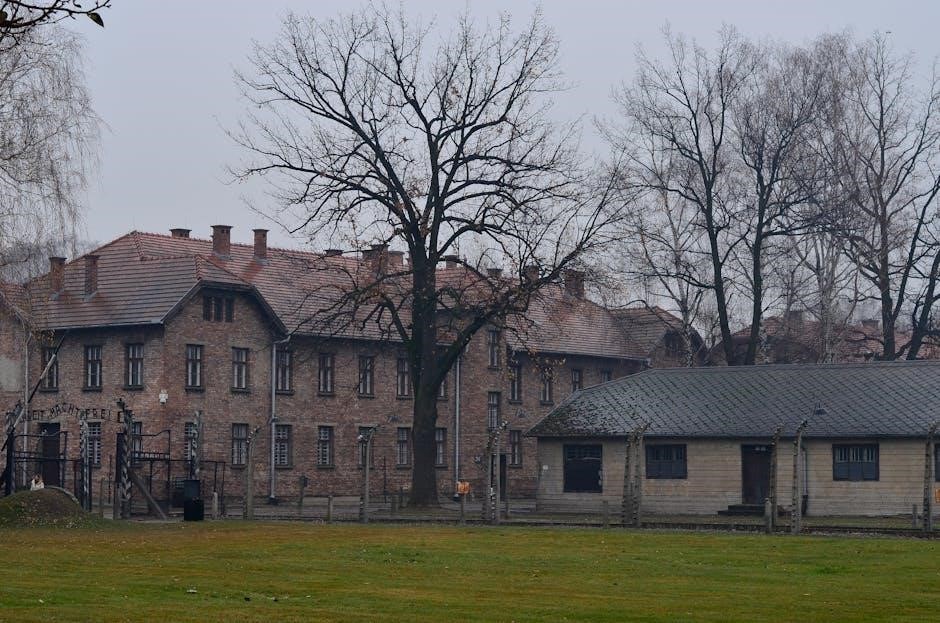
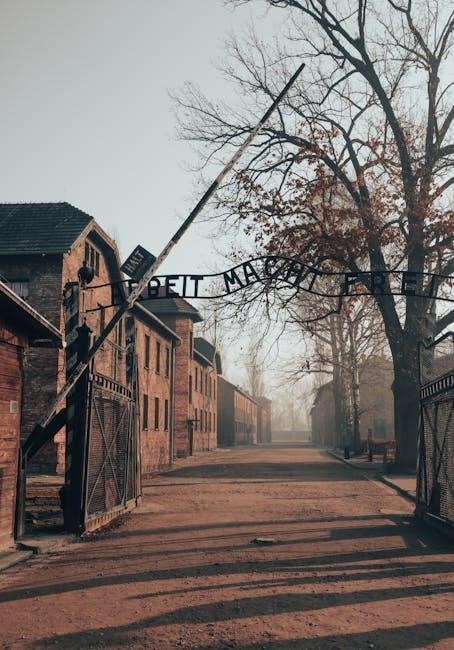
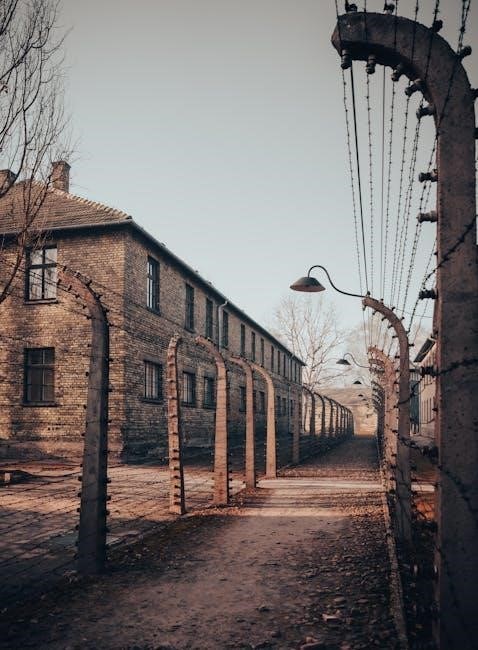
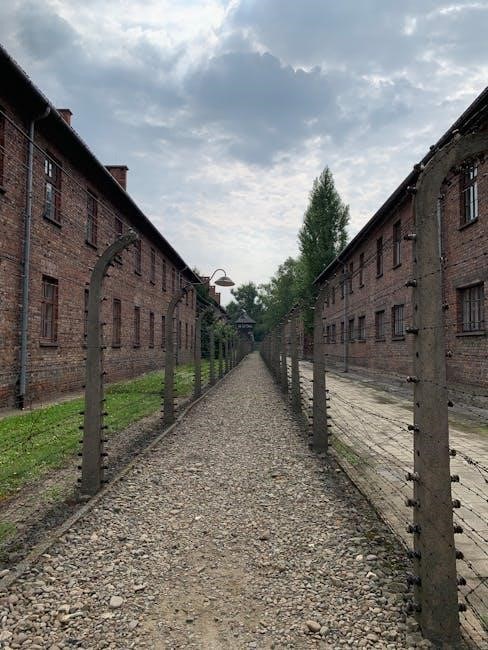
Auschwitz-Birkenau, established in 1940 in Nazi-occupied Poland, stands as the most infamous symbol of the Holocaust. Initially a concentration camp for Polish political prisoners, it evolved into a sprawling complex of camps dedicated to systematic murder. Birkenau, the primary extermination camp, utilized gas chambers and crematoria to facilitate the mass killing of Jews, Roma, Sinti, homosexuals, and political opponents.
The camp’s infrastructure was designed for efficient dehumanization and extermination, with brutal living conditions, forced labor, and medical experimentation commonplace. Prisoners arrived by train, undergoing “selection” upon arrival – those deemed fit for work were assigned to labor camps, while others were immediately sent to the gas chambers. The meticulous record-keeping, including the tattooing of identification numbers on prisoners’ arms – the very act central to Lale Sokolov’s story – was a chilling component of this systematic process.
Understanding this horrific context is crucial when approaching narratives like The Tattooist of Auschwitz, as it underscores the immense suffering and the scale of the atrocities committed within its walls.
The Author: Heather Morris and Her Background
Heather Morris is an Australian author who gained international recognition with the publication of The Tattooist of Auschwitz in 2018. Prior to becoming a novelist, Morris enjoyed a diverse career spanning hospitality, real estate, and healthcare. This varied experience, coupled with a lifelong passion for storytelling, ultimately led her to write Lale Sokolov’s remarkable story.
Morris’s journey to writing the novel began with a chance encounter and a decades-long friendship with Lale Sokolov himself. He entrusted her with his deeply personal account of survival in Auschwitz-Birkenau, a narrative he had largely kept private for many years. Driven by a desire to preserve his memory and share his experiences with a wider audience, Morris dedicated herself to meticulously researching and crafting his story into a compelling novel.
The book’s success has brought significant attention to Morris, and she continues to engage with readers and advocate for Holocaust education.
Lale Sokolov: The Real-Life Inspiration
Lale Sokolov (born Ludwig Eisenberg) was a Slovakian Jew who survived the horrors of Auschwitz-Birkenau. His experiences form the core of Heather Morris’s novel, The Tattooist of Auschwitz. In 1942, Sokolov was deported to the camp and assigned the role of Tätowierer – the tattooist – responsible for branding fellow prisoners with identification numbers.
This position, while horrific, afforded him slightly more privileges and opportunities for small acts of kindness and survival. He utilized his access to supplies to aid fellow inmates, demonstrating remarkable courage and resilience amidst unimaginable suffering. Crucially, within the camp, Lale met Gita Furman, a woman who became the love of his life and a driving force for his survival.
After liberation, Sokolov emigrated to Australia, where he built a successful life but carried the weight of his experiences. He shared his story with Heather Morris, ensuring his and Gita’s memories would endure.
Early Life and Deportation
Ludwig Eisenberg, later known as Lale Sokolov, was born in 1916 in Slovakia to a Jewish family. He grew up in a vibrant community, enjoying a relatively peaceful childhood with his parents and siblings. Lale possessed a natural entrepreneurial spirit, engaging in business ventures from a young age, demonstrating resourcefulness and ambition.
However, this idyllic existence was shattered with the rise of Nazi power and the escalating persecution of Jews. In 1942, Lale, along with thousands of others, was forcibly deported from Slovakia to Auschwitz-Birkenau. This brutal uprooting marked a devastating turning point in his life, thrusting him into the heart of the Holocaust’s horrors.
The journey to Auschwitz was dehumanizing, stripping individuals of their dignity and preparing them for the unimaginable suffering that awaited them. Upon arrival, Lale was immediately separated from his family, facing an uncertain and terrifying future.
Arrival at Auschwitz and Assignment as a Tattooist
Upon arriving at Auschwitz in 1942, Lale Sokolov endured the initial horrors of selection and the chaotic processing of new prisoners. The immediate shock of witnessing the camp’s brutality and the separation from any semblance of normalcy was overwhelming. He quickly realized the desperate fight for survival that lay ahead.
Remarkably, Lale was selected to become the Tätowierer – the tattooist – a position that, while still within the confines of the camp, offered a slightly different existence than most prisoners. This assignment was not sought, but thrust upon him, and it came with a complex set of responsibilities and moral ambiguities.
His role involved tattooing identification numbers onto the arms of incoming prisoners, a deeply dehumanizing act that nonetheless provided him with certain privileges, like slightly better food rations and lodging, which he leveraged to help others.
The Role of the Tattooist in the Camp
Lale Sokolov’s position as the Tätowierer placed him in a uniquely precarious position within Auschwitz. While still a prisoner subjected to the camp’s horrors, his role granted him limited privileges and access to resources unavailable to most. This access wasn’t born of power, but necessity for the SS’s administrative functions.
He wasn’t a collaborator in the traditional sense, but his work was integral to the systematic dehumanization process. The act of permanently marking individuals with numbers stripped them of their identities, reducing them to mere statistics. However, Lale strategically used his position to obtain extra food, medicine, and supplies.
These resources were then discreetly shared with fellow prisoners, offering small acts of kindness and bolstering their chances of survival. His role, therefore, became a complex blend of enforced participation and quiet resistance, a desperate attempt to mitigate suffering within an unimaginable system.
The Process of Tattooing Numbers
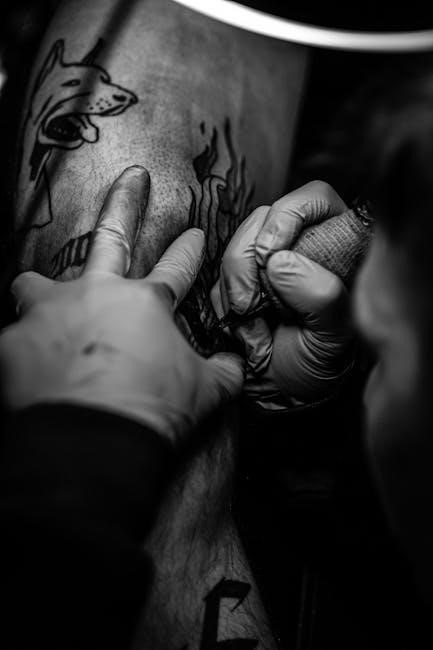
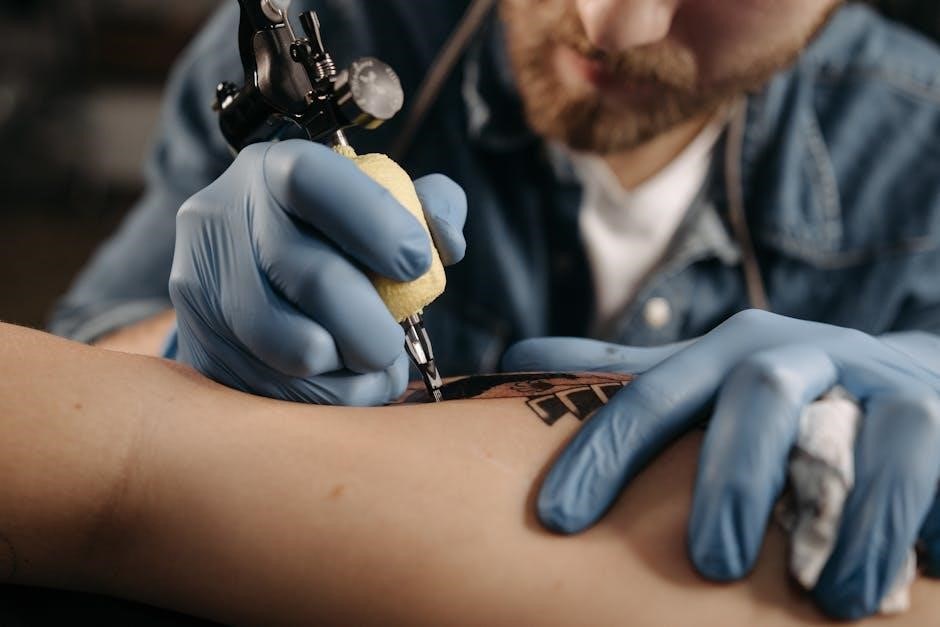
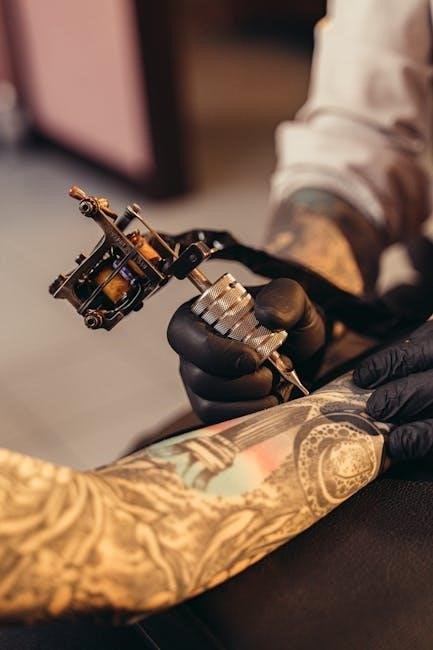
The tattooing process itself was brutal and unsanitary. Lale, along with other Tätowierer, used a simple hand-operated machine with a single needle to inject a blue-black dye into the skin of prisoners’ forearms. The dye was often diluted and of poor quality, leading to infections and prolonged pain.
Each prisoner was forced to stand during the procedure, often enduring it in harsh weather conditions. The numbers were applied in a standardized format, beginning with letters denoting the prisoner’s category (e.g., Jewish, political, criminal) followed by a series of digits.
The process was deliberately dehumanizing, performed quickly and without regard for the prisoners’ suffering. Lale described the physical and emotional toll it took on him, witnessing the fear and despair in the eyes of those he marked. It was a chillingly efficient component of the Nazi’s systematic persecution.
The Ethical Dilemmas Faced
Lale Sokolov’s position as the Tätowierer presented profound ethical challenges. He was forced to participate in a system designed to dehumanize and ultimately destroy human lives, yet his role offered certain privileges – extra rations and relative safety – which he leveraged to help others.
He grappled with the moral conflict of benefiting from the suffering of his fellow prisoners. Utilizing his position, Lale secretly traded goods obtained through connections with outside individuals for food and medicine, sharing them with those in desperate need.
This created a constant risk of discovery and severe punishment, forcing him to navigate a treacherous landscape of survival and moral compromise. His actions, while born of desperation and compassion, raised complex questions about collaboration and resistance within the camp’s horrific context.
Relationships and Survival Strategies
Within Auschwitz, forming connections was crucial for survival, though fraught with danger. Lale Sokolov’s relationship with Gita Furman became his primary motivation, driving him to utilize his position and network to secure her well-being and, ultimately, their escape.
Beyond romantic love, Lale cultivated relationships with other prisoners and even some SS officers, engaging in bartering and leveraging favors to obtain vital resources like food, medicine, and information. These connections weren’t based on trust, but on calculated necessity.
Survival hinged on maintaining a low profile, anticipating the whims of the guards, and exploiting any opportunity, however small. The widespread circulation of unauthorized PDF copies of the book doesn’t diminish the core truth of these desperate strategies employed daily within the camp.
Lale and Gita: A Love Story in the Camp
Lale Sokolov’s love for Gita Furman blossomed amidst the horrors of Auschwitz, offering a beacon of hope in unimaginable darkness. Their connection, initially sparked by a fleeting glance, deepened through shared hardship and a mutual determination to survive.
Lale used his privileged position as the Tätowierer to subtly aid Gita, securing her slightly better work assignments and occasionally extra provisions. This wasn’t a grand gesture of defiance, but a series of small, calculated risks taken daily to improve her chances.
The enduring power of their love story, as depicted in the book – even with the controversies surrounding its accuracy and the proliferation of unauthorized PDF versions – highlights the human capacity for connection even in the face of systematic dehumanization. Their bond represents a testament to the resilience of the human spirit.
The Challenges of Maintaining Hope
Within Auschwitz, hope was a fragile commodity, constantly threatened by the omnipresent reality of death and suffering. For Lale Sokolov and others, clinging to any semblance of optimism required immense inner strength and a deliberate rejection of despair.
The widespread availability of unauthorized PDF copies of “The Tattooist of Auschwitz” ironically presents a challenge to maintaining the integrity of the story’s message; While increasing access, it diminishes the author’s intent and potentially trivializes the experiences depicted.
Lale found solace in his love for Gita, small acts of kindness, and a belief in a future beyond the camp’s walls. Maintaining this hope, however, demanded a constant battle against the psychological toll of witnessing unimaginable cruelty, a struggle mirrored in the book’s narrative and its contested authenticity.
Acts of Resistance and Kindness
Despite the brutal conditions, acts of resistance and kindness flickered within Auschwitz, offering glimmers of humanity amidst the darkness. Lale Sokolov, through his position, leveraged small opportunities to aid fellow prisoners, procuring extra food or medicine, demonstrating a quiet defiance against the Nazi regime.
The proliferation of unauthorized “The Tattooist of Auschwitz” PDFs, while seemingly offering wider access, presents a different form of challenge to preserving the story’s impact. It undermines the author’s control over her narrative and potentially diminishes the gravity of the historical events.
These subtle acts of compassion, alongside larger, more overt forms of resistance, were crucial for survival, both physically and emotionally. They represented a refusal to be completely dehumanized, a testament to the enduring power of the human spirit, even when facing unimaginable horrors.
The Book’s Narrative: Plot Summary
Heather Morris’s “The Tattooist of Auschwitz” recounts the experiences of Lale Sokolov, a Slovakian Jew deported to Auschwitz-Birkenau in 1942. Assigned the role of Tätowierer – the camp’s tattooist – Lale uses his position to subtly aid fellow prisoners, navigating a treacherous landscape of power and brutality.
The narrative centers on his burgeoning love story with Gita Furman, a woman he meets while tattooing numbers onto incoming prisoners. Their relationship becomes a beacon of hope amidst the despair, fueling their determination to survive. The story details Lale’s efforts to secure extra provisions for Gita and others, risking his own life in the process.
However, the widespread availability of unofficial “The Tattooist of Auschwitz” PDFs raises concerns about the integrity of the story’s dissemination and the author’s rights, potentially overshadowing the core narrative of resilience and love.
Accuracy and Authenticity: Fact-Checking Concerns
Despite its immense popularity, “The Tattooist of Auschwitz” has faced significant scrutiny regarding its historical accuracy. Concerns arose following investigations by the Auschwitz-Birkenau Memorial and Museum, highlighting discrepancies between the book’s portrayal of events and documented historical records.
The proliferation of unauthorized PDF versions online complicates matters, as these often lack the contextual notes or authorial clarifications present in legitimate editions. This can further contribute to the spread of misinformation. Critics point to inaccuracies in details regarding camp operations, the role of the tattooists, and specific events described in the narrative.
While based on Lale Sokolov’s testimony, the novel employs fictionalized elements, blurring the lines between memoir and historical fiction. The ease with which the PDF is shared amplifies the risk of it being perceived as a purely factual account.
Criticism from the Auschwitz-Birkenau Memorial
The Auschwitz-Birkenau Memorial issued a formal critique of “The Tattooist of Auschwitz,” expressing concerns over historical inaccuracies and misrepresentations. Their statement, widely reported by The Guardian and other news outlets, specifically addressed factual errors within the narrative, impacting the authenticity of the Holocaust portrayal.
The Memorial highlighted issues with the depiction of daily life in the camp, the roles of SS personnel, and the overall atmosphere of Auschwitz. They emphasized the importance of relying on documented evidence and survivor testimonies when representing such a sensitive historical event.
The widespread availability of the book in unauthorized PDF format exacerbates these concerns, as it removes the potential for readers to encounter clarifying information or contextualization often found in published editions. This contributes to the perpetuation of inaccuracies and potentially diminishes the gravity of the Holocaust.
Discrepancies and Historical Inaccuracies
Numerous discrepancies within “The Tattooist of Auschwitz” have been identified by historians and Holocaust scholars. These range from inaccuracies regarding camp procedures – like the ease of access to soap and medication depicted – to questionable details surrounding Lale Sokolov’s interactions with Josef Mengele.
The narrative’s portrayal of a functioning “beauty corner” within the camp, and the alleged preferential treatment afforded to Lale, have been particularly scrutinized. Critics argue these elements romanticize the horrific realities of Auschwitz and diminish the suffering of other prisoners.
The proliferation of the book as an unauthorized PDF further complicates matters. Without editorial oversight or accompanying historical context, readers may be less likely to critically evaluate the presented information, potentially accepting fictionalized elements as factual accounts of the Holocaust.
The Debate Surrounding Fictionalization of Holocaust Accounts
The success of “The Tattooist of Auschwitz,” and its widespread distribution as a PDF, ignited a crucial debate regarding the ethics of fictionalizing Holocaust narratives. While proponents argue such novels can introduce a wider audience to this dark period of history, critics express concern over the potential for distortion and trivialization.
The core issue lies in balancing accessibility with historical responsibility. Fictional liberties, even with good intentions, can inadvertently perpetuate inaccuracies or overshadow the testimonies of actual survivors. The ease with which the PDF version spreads amplifies this risk, removing opportunities for contextualization often found in published editions.
Many believe that direct survivor accounts should remain central to Holocaust education, and fictional works should be approached with critical awareness, acknowledging their inherent limitations and potential for misrepresentation.
Reception and Popularity of the Book
“The Tattooist of Auschwitz” achieved phenomenal commercial success, becoming an international bestseller despite, and perhaps fueled by, its controversial reception. Its accessibility and compelling narrative resonated with a broad readership, leading to translations into numerous languages and widespread book club discussions.
However, the book’s popularity was significantly impacted by the rampant, unauthorized distribution of a PDF version online. While increasing its reach, this piracy undermined legitimate sales and raised concerns about copyright infringement. The readily available PDF contributed to a rapid spread of the story, but also bypassed opportunities for authorial intent and contextual information.
Despite criticism regarding historical accuracy, the book’s emotional impact and focus on a love story within the horrors of Auschwitz clearly captivated many readers, solidifying its place in contemporary Holocaust literature.
Impact on Public Understanding of the Holocaust
“The Tattooist of Auschwitz” undeniably broadened public engagement with the Holocaust, particularly among readers new to the subject matter. The novel’s accessible narrative, focusing on a personal story of survival and love, served as an entry point for many, sparking interest in further Holocaust education and remembrance.
However, the widespread circulation of the unauthorized PDF version presented a complex dynamic. While increasing exposure, it also risked a superficial understanding, divorced from scholarly context and critical analysis. The lack of accompanying resources within the PDF format potentially hindered a nuanced grasp of the historical complexities.
The book prompted conversations, but also debates about the responsibility of fictionalized accounts in representing such a sensitive historical event, highlighting the need for balanced and accurate information.
Controversies and Ethical Considerations
The proliferation of the unauthorized “Tattooist of Auschwitz” PDF significantly fueled ethical debates surrounding Holocaust representation and copyright infringement. The widespread, free distribution undermined Heather Morris’s authorial rights and potentially reduced revenue for Holocaust education initiatives.
More profoundly, the ease of access via PDF raised concerns about the potential for diluted engagement with the Holocaust’s gravity. Without the context provided by published editions – author’s notes, historical background – readers might absorb a simplified, potentially inaccurate portrayal.
The controversy underscored the tension between broadening access to Holocaust narratives and safeguarding the integrity of historical memory. It prompted discussions about responsible consumption and the importance of seeking verified sources when learning about this sensitive period.
The “PDF” Issue: Unauthorized Distributions and Copyright
The extensive online circulation of an unauthorized PDF version of “The Tattooist of Auschwitz” presented a significant copyright challenge for the author and publisher. This widespread digital piracy deprived rights holders of legitimate revenue and complicated efforts to control the narrative’s dissemination.
Numerous websites hosted the illegally distributed file, making it readily accessible despite takedown requests. This highlighted the difficulties in policing copyright in the digital age, particularly for popular works. The ease with which the PDF spread underscored the demand for the story, but also the disregard for intellectual property rights.
The issue prompted discussions about the ethical implications of downloading and sharing copyrighted material, even when motivated by a desire to learn about the Holocaust. It emphasized the importance of supporting authors and publishers through legal channels.

Finding Legitimate Copies of the Book
Given the prevalence of unauthorized PDF copies, securing a legitimate edition of “The Tattooist of Auschwitz” requires deliberate effort. Readers interested in supporting Heather Morris and respecting copyright law have several reliable options available.
Major booksellers, both online and in physical stores – including Amazon, Barnes & Noble, and independent bookstores – offer the novel in various formats: hardcover, paperback, and ebook. Purchasing through these channels ensures the author receives proper compensation for her work. Digital ebook versions are available through platforms like Kindle and Kobo.
Library systems also provide access to the book, offering a free and legal way to read it. Checking local library catalogs or utilizing interlibrary loan services are excellent alternatives to downloading potentially harmful or illegal PDFs.
Digital Access and Piracy Concerns
The widespread availability of unauthorized PDF copies of “The Tattooist of Auschwitz” presents significant digital access and piracy concerns. Downloading these illegal versions not only violates copyright law but also exposes users to potential security risks, including malware and viruses.
The proliferation of these PDFs undermines the author’s rights and the publishing industry’s efforts to protect intellectual property. Supporting legitimate channels for accessing the book – such as purchasing ebooks from authorized retailers or borrowing from libraries – is crucial.
Furthermore, the ease with which these PDFs are shared contributes to a culture of disrespect for creative work. Choosing legal avenues demonstrates a commitment to ethical consumption and ensures the continued creation of impactful stories like Lale Sokolov’s.
Related Works and Further Reading
Beyond “The Tattooist of Auschwitz,” numerous resources offer deeper insights into the Holocaust and related narratives. While seeking information, be mindful of the proliferation of unauthorized PDF copies of Morris’s novel and prioritize legitimate sources.
For firsthand accounts, consider Elie Wiesel’s “Night” and Primo Levi’s “Survival in Auschwitz.” These memoirs provide harrowing depictions of life within concentration camps. Exploring documentaries and films about Auschwitz, such as those listed in dedicated resources, offers visual and emotional context.
Further reading can include historical analyses of the Holocaust, studies of survivor experiences, and explorations of ethical considerations surrounding fictionalized accounts. Remember to verify the credibility of sources, especially when encountering information online, and avoid contributing to copyright infringement by utilizing legal access methods.
Documentaries and Films about Auschwitz
Visual media offers powerful perspectives on the horrors of Auschwitz, complementing the narrative presented in “The Tattooist of Auschwitz.” However, be cautious when sourcing materials online, avoiding unauthorized PDF copies of the book and prioritizing reputable sources.
Notable documentaries include “Auschwitz: Inside the Nazi Death Camp,” providing a detailed examination of the camp’s infrastructure and operations. Films like “Schindler’s List” and “The Pianist,” while fictionalized, offer poignant portrayals of survival during the Holocaust. These works, alongside historical footage and survivor testimonies, contribute to a comprehensive understanding.
Exploring these resources enhances the emotional impact and historical context, reminding us of the importance of remembering and learning from this dark chapter. Always verify the authenticity and historical accuracy of any visual media encountered, and support legitimate distribution channels.
Resources for Holocaust Education
Numerous organizations dedicate themselves to preserving the memory of the Holocaust and providing educational resources. While “The Tattooist of Auschwitz” sparks interest, it’s crucial to supplement its reading with verified historical information, avoiding reliance on unauthorized PDF versions circulating online.
The United States Holocaust Memorial Museum (USHMM) offers extensive online resources, including survivor testimonies, historical photographs, and scholarly articles. Yad Vashem, the World Holocaust Remembrance Center, provides similar materials and research opportunities. These institutions prioritize accuracy and ethical representation.
Educational initiatives like Facing History and Ourselves offer curricula and professional development for educators. Always prioritize credible sources and engage with established Holocaust education centers to foster a deeper, more nuanced understanding of this tragic period in history. Supporting these organizations helps ensure accurate remembrance.