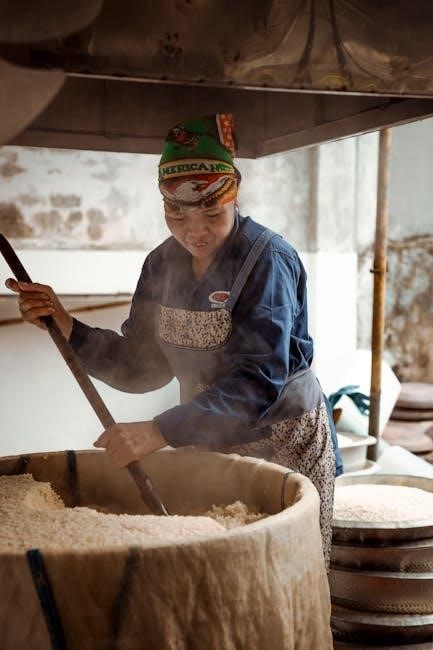
Rice steamers offer a convenient and efficient method for cooking perfect grains, as detailed in numerous guides from late 2024 and 2025.
These appliances simplify rice preparation, ensuring consistent results, and are covered extensively in user manuals and online resources for optimal performance.
Understanding the nuances of operation, as highlighted in recent publications, will elevate your cooking experience and deliver consistently fluffy rice.
What is a Rice Steamer?
A rice steamer, as detailed in recent manuals and guides published between November 2024 and October 2025, is an electric appliance specifically designed for cooking rice using steam.
Unlike traditional methods involving stovetop boiling, a rice steamer utilizes a controlled steaming process, ensuring even cooking and preventing sticking or burning.
These appliances typically consist of a heating element, a water reservoir, and a cooking pot where the rice is placed. The steamer heats the water, creating steam that cooks the rice to perfection.
Modern rice steamers often include features like automatic shut-off, “keep warm” functions, and timers, enhancing convenience and versatility, as noted in various product reviews and user guides.
Benefits of Using a Rice Steamer
Utilizing a rice steamer, as highlighted in guides from late 2024 and 2025, offers numerous advantages over conventional cooking methods. These appliances consistently deliver perfectly cooked rice, eliminating guesswork and reducing the risk of undercooked or burnt grains.
Rice steamers are incredibly convenient, often featuring automatic functions and “keep warm” settings, simplifying meal preparation and ensuring rice is ready when you are.
Furthermore, steaming preserves more nutrients compared to boiling, promoting a healthier meal. Many models also allow for simultaneous steaming of vegetables, creating complete and balanced dishes.
The ease of cleaning and maintenance, as emphasized in user manuals, adds to the overall appeal of rice steamers.
Understanding Your Rice Steamer
Familiarizing yourself with your rice steamer’s components and controls, as detailed in service manuals (like the Panasonic SR-TEG18), is crucial for optimal operation and longevity.
Key Components of a Rice Steamer
A typical rice steamer comprises several essential parts working in harmony. The heating element, often cast or mica-based, generates the necessary heat for steaming, and requires periodic inspection for damage or mineral buildup.
The inner pot, usually non-stick, holds the rice and water, while the outer housing provides insulation and structural support. A control panel manages settings, and a steam vent releases excess moisture.
Crucially, a thermal fuse safeguards against overheating, and the power cord delivers electricity. Understanding each component, as outlined in manuals, aids in troubleshooting and maintenance.
Control Panel Overview
The control panel is the user interface for your rice steamer, typically featuring buttons for “Start,” “Keep Warm,” and potentially a “Delayed Start” timer. Some models offer specific programs like “White Rice” or “Brown Rice,” automatically adjusting cooking times.
Indicator lights signal the steamer’s operational status – cooking, warming, or off. Understanding these controls, as detailed in the manual, is vital for proper operation.
More advanced steamers may include settings for different rice types or grain quantities, ensuring optimal results every time, as highlighted in recent guides.
Types of Rice Steamers (Based on Capacity)
Rice steamers are categorized by their capacity, typically measured in cups (cooked rice). Smaller models (3-6 cups) suit individuals or small families, while mid-size steamers (7-10 cups) cater to medium-sized households.
Larger capacity steamers (10+ cups) are ideal for larger families or entertaining. The manual will specify the steamer’s capacity and recommended rice-to-water ratios for each setting.
Choosing the right size ensures efficient cooking and prevents overcrowding, contributing to perfectly steamed rice every time, as detailed in recent guides.

Preparing to Steam Rice
Proper preparation is key to successful steaming! Consult your manual for accurate rice-to-water ratios and rinsing instructions, ensuring optimal texture and flavor.
Adjustments may be needed based on the rice variety, as detailed in comprehensive guides for consistently perfect results.
Measuring Rice and Water Ratios
Accurate measurement is crucial for perfectly steamed rice; always refer to your rice steamer’s manual for specific guidelines. Generally, a 1:1 ratio of rice to water works well for white rice, but this can vary.
Many steamers include a dedicated measuring cup designed for precise rice portions. Water level markings inside the steamer pot provide a visual guide, simplifying the process;
Remember that different rice varieties require different water amounts – brown rice typically needs more water than white rice. Following the manual’s recommendations ensures optimal texture and prevents mushy or hard grains.
Experimenting slightly within the recommended range can help you achieve your preferred consistency.
Different Rice Varieties and Water Adjustments
Rice steamer manuals emphasize that water ratios aren’t one-size-fits-all. White rice generally requires a 1:1 ratio, while brown rice needs approximately 1 part rice to 1.5-2 parts water due to its bran layer.
Long-grain rice often needs less water than short-grain. Sticky rice demands even more, sometimes up to 1.25 parts water per 1 part rice.
Always consult your steamer’s guide for specific variety recommendations. Adjustments may be necessary based on personal preference for texture – slightly more water yields softer rice.
Experimentation, guided by the manual, is key to mastering different rice types.
Rinsing Rice: Why and How
Rice steamer manuals consistently recommend rinsing rice before cooking. This crucial step removes excess starch, preventing a sticky or mushy texture and resulting in fluffier grains.
Place rice in a fine-mesh sieve and rinse under cold water, gently swirling with your hand, until the water runs clear – typically 3-5 times.
Some manuals suggest soaking the rice for 30 minutes post-rinsing, further improving texture. However, this isn’t always necessary.
Proper rinsing, as detailed in the guide, significantly impacts the final product.

Steaming Rice: Step-by-Step Guide
Rice steamer manuals detail a simple process: measure rice and water, place in the cooker, and press start for perfectly steamed grains every time.
Follow the recommended ratios for your specific rice type, ensuring optimal results.
Basic White Rice Steaming Instructions
Following your rice steamer manual, begin by measuring the desired amount of white rice. A typical ratio is 1 cup of rice to 1.25 cups of water, though this can vary.
Rinse the rice thoroughly under cold water until the water runs clear – this removes excess starch for fluffier results.
Place the rinsed rice and water into the steamer’s inner pot. Secure the lid and select the “White Rice” setting on the control panel.
Press start, and the steamer will automatically cook the rice. Once complete, it will switch to the “Keep Warm” function. Allow the rice to rest for 10 minutes before fluffing with a fork.
Refer to your specific model’s manual for precise timings and adjustments.
Steaming Brown Rice Instructions
Consult your rice steamer manual for optimal brown rice settings. Brown rice requires a different water ratio than white rice, typically around 1 cup of rice to 2 cups of water.
Rinsing is still recommended, though some prefer to skip it for a slightly chewier texture. Place the rinsed rice and water into the steamer’s inner pot.
Select the “Brown Rice” setting on the control panel. This setting extends the cooking time to properly soften the grain.
Press start and allow the steamer to complete the cycle. After cooking, let the rice rest, covered, for 10-15 minutes before fluffing.
Adjust water slightly based on desired consistency.
Steaming Other Grains (Quinoa, Oats)
Your rice steamer manual may offer specific settings for grains beyond rice. Quinoa generally uses a 1:2 ratio (quinoa to water), similar to white rice, but requires a shorter cooking time.
Use the “White Rice” setting, monitoring closely to prevent overcooking. For oats, a 1:2.5 ratio (oats to water) works well, utilizing the “Porridge” or “Quick Cook” setting if available.
If no specific setting exists, experiment with the “White Rice” setting, reducing cooking time incrementally.
Always rinse quinoa thoroughly before steaming to remove saponins. Adjust water ratios based on desired texture and grain type.
Monitor closely during the first attempt.

Advanced Steaming Techniques
Rice steamer manuals detail features like “Keep Warm” and delayed start timers for convenience. Explore steaming vegetables alongside rice for complete meals!
These functions enhance versatility, allowing for perfectly timed and heated dishes, as described in recent guides.
Using the “Keep Warm” Function
The “Keep Warm” function, detailed in most rice steamer manuals, automatically switches on after the steaming cycle completes. This maintains rice temperature without overcooking, ensuring a consistently fluffy texture for extended periods.
It’s ideal for situations where meals aren’t served immediately, preventing the rice from becoming dry or hard. However, prolonged use – exceeding several hours – may slightly alter the rice’s texture.
Refer to your specific model’s manual for recommended “Keep Warm” duration. Some advanced steamers offer adjustable “Keep Warm” settings, allowing you to customize the temperature based on your needs and preferences.
Regularly check the rice’s moisture level during extended “Keep Warm” periods to maintain optimal quality.
Delayed Start Timer Function
The Delayed Start Timer, a feature found in many modern rice steamer manuals, allows you to pre-set a cooking time, ensuring freshly steamed rice is ready when you need it. This is incredibly convenient for meal planning and busy schedules.
Typically, you’ll input the desired start time, and the steamer will automatically begin the cooking cycle. Ensure rice and water are added before setting the timer.
Consult your specific model’s manual for detailed instructions, as timer settings vary. Some steamers offer multiple timer options, while others have a simple delay function. Proper setup guarantees perfectly timed rice.
Always verify the timer is correctly programmed before leaving the steamer unattended.
Steaming Vegetables Alongside Rice
Many rice steamer manuals detail the ability to steam vegetables concurrently with rice, maximizing efficiency and creating complete meals. Utilize the included steaming basket, positioned above the rice, to achieve this.
Vegetables with similar cooking times are ideal; consider broccoli florets, sliced carrots, or green beans. Adjust water levels slightly if steaming a large quantity of vegetables.
Check vegetable tenderness towards the end of the rice cooking cycle to prevent overcooking. Some models have dedicated vegetable steaming programs for optimized results.
Always refer to your steamer’s manual for specific guidelines and recommended vegetable quantities.

Troubleshooting Common Issues
Rice steamer manuals often address issues like mushy or hard rice, or failure to power on, providing solutions for common problems and ensuring optimal function.
Checking power, the thermal fuse, and heating elements are key diagnostic steps, as outlined in service guides and repair documentation.
Rice is Too Mushy
If your rice is consistently mushy, consult your rice steamer manual for guidance. Typically, this indicates an excess of water used during the steaming process. Carefully review the recommended rice-to-water ratios for the specific rice variety you are using.
Ensure accurate measurement using the provided measuring cup. Reducing the water quantity slightly in subsequent attempts can often resolve the issue. Also, avoid lifting the lid during the steaming cycle, as this releases steam and disrupts the cooking process.
Some manuals suggest rinsing rice thoroughly before steaming, which can help remove excess starch contributing to a mushy texture. Finally, verify the steamer’s settings are appropriate for the type of rice being cooked.
Rice is Too Hard
When rice emerges too hard, your rice steamer manual is the first resource. This usually signifies insufficient water was used during steaming. Increase the water amount incrementally in your next attempt, adhering to the recommended ratios for your rice type.
Ensure precise measurement with the provided cup. Avoid interrupting the steaming cycle by lifting the lid, as this releases essential steam. Some manuals advise a brief soaking period before steaming, particularly for harder rice varieties.
Double-check the steamer’s settings to confirm they align with the rice type. A longer cooking time might be necessary for certain grains.
Rice Steamer Won’t Turn On
If your rice steamer fails to power on, consult your rice steamer manual immediately. Begin by verifying the power cord is securely plugged into both the steamer and a functioning electrical outlet. Test the outlet with another device to confirm it’s providing power.
Inspect the power cord for any visible damage, such as fraying or cuts. The manual may detail checking an internal thermal fuse, a common safety component; If issues persist, avoid attempting self-repair.
Contact a qualified technician or the manufacturer for assistance.

Rice Steamer Maintenance & Cleaning
Regular cleaning, as outlined in your manual, ensures optimal performance and longevity. Daily procedures involve wiping down surfaces, while deep cleaning requires more attention.
Inspect the heating element periodically for mineral buildup or damage, following the manual’s guidance.
Daily Cleaning Procedures
Following each use, disconnect your rice steamer from the power source and allow all components to cool completely, as emphasized in the manual. Remove the inner pot and steaming basket, washing them with warm, soapy water.
Avoid abrasive cleaners that could damage the non-stick coating. Wipe down the exterior of the steamer with a damp cloth. Pay close attention to the steam vent, ensuring it’s free from any obstructions.
Thoroughly dry all parts before reassembling. This prevents mineral buildup and ensures hygienic operation, extending the lifespan of your appliance, per the manual’s recommendations.
Deep Cleaning Your Rice Steamer
Periodically, a more thorough cleaning is necessary, as outlined in the rice steamer manual. After cooling and disconnecting, disassemble all removable parts. Soak the inner pot and steaming basket in warm, soapy water to loosen stubborn residue.
Inspect the heating element for mineral deposits or corrosion; gently wipe clean with a damp cloth – never submerge. Clean the exterior thoroughly, paying attention to any crevices.
Ensure all parts are completely dry before reassembly. This deep cleaning, performed monthly, maintains optimal performance and hygiene, extending the steamer’s life.
Checking the Heating Element
The rice steamer manual emphasizes the importance of inspecting the heating element for damage. Always disconnect the steamer from the power source before inspection. Carefully examine both cast and mica heaters for visible signs of corrosion, cracks, or mineral buildup.
Any damage indicates a potential malfunction requiring repair or replacement. Gently clean any deposits with a damp cloth, avoiding abrasive cleaners.
A properly functioning heating element is crucial for consistent cooking; if issues persist, consult a qualified technician for assessment and potential repair.

Repairing Common Problems
The rice steamer manual details fixes like thermal fuse replacement, power cord inspection, and suggests professional repair if issues are complex or beyond your skillset.
Prioritize safety and consult the manual before attempting any repairs to ensure proper functionality and avoid further damage.
Replacing the Thermal Fuse
According to the rice steamer manual, a blown thermal fuse is a frequent cause of a non-functioning unit, acting as a safety mechanism against overheating.
Before replacement, always disconnect the steamer from the power source. Locate the fuse – often near the heating element – and carefully document its placement and wiring.
Obtain an identical replacement fuse (same amperage and voltage) and carefully disconnect the old one, connecting the new fuse securely. Reassemble the steamer and test its operation.
If the new fuse blows immediately, a more significant underlying issue exists, potentially with the heating element or control circuitry, requiring professional attention.
Power Cord Inspection and Replacement
The rice steamer manual emphasizes the importance of a regularly inspected power cord for safety and functionality. Look for visible signs of damage – fraying, cuts, or exposed wires.
If damage is detected, immediately discontinue use and proceed with replacement. Disconnect the steamer before attempting any repairs. Carefully access the cord’s connection point within the unit.
Document the wiring configuration before disconnecting the old cord. Install a replacement cord of the same gauge and type, ensuring secure connections.
Always test the repaired steamer in a safe environment before resuming normal operation, verifying the cord’s integrity and proper functionality.
Professional Repair vs. Replacement
The rice steamer manual advises evaluating repair costs against the price of a new unit. For minor issues like a thermal fuse, professional repair might be economical.
However, if the heating element is damaged or the control panel malfunctions, repair costs can quickly escalate. Consider the steamer’s age and overall condition.
A newer model often offers improved features and energy efficiency. Weigh the cost of repair, including labor, against the benefits of a replacement.
If the repair exceeds 50% of the new unit’s price, replacement is generally the more sensible option, ensuring long-term reliability and performance.

Safety Precautions
The manual stresses electrical safety and careful handling of hot steam to avoid burns. Always prevent damage to the steamer during operation and cleaning.
Follow guidelines for safe usage, ensuring a secure and enjoyable cooking experience with your appliance.
Electrical Safety Guidelines
Always ensure the rice steamer is properly grounded to prevent electrical shock, as detailed in safety sections of user manuals. Never operate the appliance with a damaged cord or plug; immediate replacement is crucial.
Avoid using extension cords if possible, and if necessary, select one rated for the steamer’s wattage. Do not immerse the steamer base, cord, or plug in water or other liquids. Unplug the steamer from the outlet when not in use and before cleaning.
Inspect the power cord regularly for any signs of wear or damage. If the steamer malfunctions, do not attempt self-repair; consult a qualified technician or refer to the warranty information for repair options.
Proper Handling of Hot Steam
Exercise extreme caution when opening the rice steamer lid after cooking, as hot steam will be released – a critical safety point in many manuals. Always direct the steam away from your face and hands to prevent burns.
Use oven mitts or pot holders when handling the inner pot or steaming basket, as they will be very hot. Avoid touching any hot surfaces of the steamer during or immediately after operation.
Ensure adequate ventilation in the kitchen while steaming to prevent steam buildup. Never attempt to move the steamer while it’s still hot or contains hot rice and liquids.
Avoiding Damage to the Steamer
Never immerse the rice steamer base in water or any other liquid, as this can cause electrical shock and damage the unit – a frequent warning in user guides. Avoid using abrasive cleaners or scouring pads on the steamer’s surfaces, which can scratch and damage the finish.
Do not operate the steamer with a damaged cord or plug, and always unplug it before cleaning or storing. Ensure the inner pot is properly seated before starting the steaming process.
Refrain from using the steamer for purposes other than cooking rice and grains, as misuse can void the warranty and cause malfunction.

Rice Steamer Accessories
Essential accessories include steaming baskets for versatile cooking, precise measuring cups for accurate ratios, and readily available spare parts for longevity.
These additions, often mentioned in manuals, enhance functionality and ensure your steamer remains in optimal working condition for years to come.
Steaming Baskets
Steaming baskets are incredibly versatile accessories, expanding your rice steamer’s capabilities beyond just rice. They allow for simultaneous cooking of vegetables, fish, or dumplings alongside your grains, creating complete meals with ease.
Many rice steamer manuals detail how to properly utilize these baskets, emphasizing the importance of not overcrowding them to ensure even steam circulation.
Different materials, like plastic or stainless steel, are common, with stainless steel often preferred for its durability and ease of cleaning. Always check your steamer’s manual for compatibility and recommended usage guidelines for steaming baskets.
Proper basket placement is crucial for optimal results, as outlined in various guides.
Measuring Cups
Measuring cups specifically designed for rice steamers are vital for achieving the correct rice-to-water ratio, a cornerstone of perfectly cooked rice. These aren’t standard measuring cups; they’re calibrated to the steamer’s internal volume.
Your rice steamer manual will emphasize using only the provided cup, as standard cups can lead to inaccurate measurements and inconsistent results.
Many guides highlight that these cups often have a slightly different capacity than standard US or metric cups. Losing the original cup necessitates finding a precise replacement to maintain cooking accuracy.
Always refer to the manual for specific cup markings and corresponding water levels.
Spare Parts Availability
Spare parts for rice steamers can vary significantly depending on the brand and model. Many manufacturers offer replacement components like inner pots, steaming baskets, and thermal fuses directly through their websites or authorized service centers.
However, availability can be limited for older models. Online retailers specializing in appliance parts often stock common replacements.
The service manual for your specific unit, like the Panasonic SR-TEG18, may list part numbers, aiding in your search.
Always verify compatibility before purchasing, and consider professional repair if you’re unsure.